
IT IS YOUR MONEY
Capture Carbon International: Green Fenix Trees are growing Digital Money While Healing the Planet.
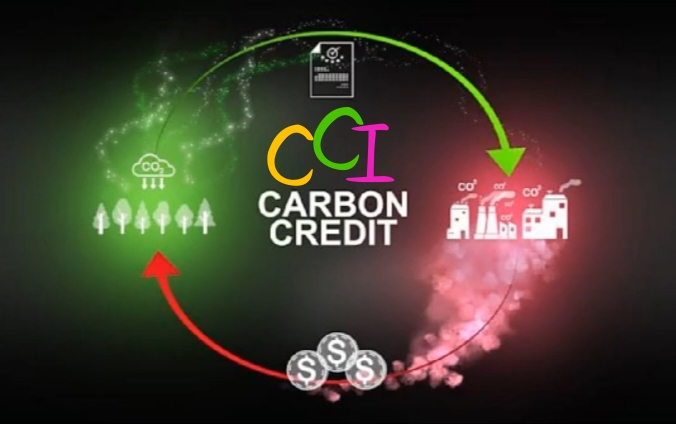
As the global carbon credit market surges toward a projected $6 trillion by 2035. CCI is tokenizing verified carbon removals credits using blockchain, participating in the Real World Assets Tokenization industry and using “Digital Money” (DM) as unit of account to back CCI's carbon credit ecological value. This isn’t just reforestation—it’s regenerative finance by a Unique Tree.
GreenFenixTree.com - Nature’s Multifunctional Climate Solution.
At the heart of Capture Carbon International’s (CCI) mission lies the Green Fenix Tree, a species so versatile and adaptive it redefines what’s possible in ecological restoration and sustainable enterprise. Native to resilient ecosystems and refined through ethical, non-GMO hybridization, this tree is the fastest-growing on Earth, capable of reaching maturity in under seven years. Crucially, it flourishes in marginal or barren soils where conventional agriculture fails, making it ideal for land rehabilitation in arid, degraded, or post-industrial zones.
Beyond its rapid growth, the Green Fenix Tree delivers cascading benefits across multiple sectors. Its leaves are nutrient-dense, rich in protein and essential amino acids, offering high-quality fodder for livestock without competing with human food crops. The fragrant flowers attract pollinators—especially bees—supporting biodiversity and enabling adjacent honey production, a critical economic activity in rural communities. These same flowers yield extracts for perfumery, nutraceuticals, and traditional medicines, creating additional revenue streams.
Meanwhile, the wood is durable, lightweight, and aesthetically appealing—ideal for furniture, musical instruments, surfboards, and packaging. Notably, it meets the specific needs of industries like tobacco, which requires vast quantities of wood for curing leaves. By supplying this demand sustainably, CCI helps decouple industrial processes from deforestation. Every part of the tree is utilized, embodying a circular economy model where waste is eliminated and value is multiplied.
Most importantly, the Green Fenix Tree is a carbon sequestration powerhouse. Its dense biomass and rapid growth cycle enable it to capture and store significant volumes of CO₂—far exceeding many traditional forest species. In a world racing to meet net-zero targets, this tree isn’t just green infrastructure; it’s a living carbon vault.
The Carbon Credit Market: A $6 Trillion Opportunity for Regenerative Enterprise.
The global carbon credit market is undergoing a historic transformation. Driven by tightening climate regulations, corporate net-zero pledges, and rising consumer demand for sustainability, the market is projected to expand from $130 to $680 billion in 2025 to over **$6 trillion by 2035**—a compound annual growth rate (CAGR) of 15–25%. This explosive growth is not merely speculative; it reflects a fundamental realignment of global capital toward climate-positive investments.
Carbon credits function as tradable certificates representing one metric ton of CO₂ removed from the atmosphere or prevented from being emitted. They operate in two primary markets: **COMPLIANCE** and **VOLUNTARY**. The compliance market, regulated by governments under frameworks like the EU Emissions Trading System (EU ETS) or California’s Cap-and-Trade, mandates that high-emission industries offset excess pollution. The voluntary market, though unregulated, is rapidly professionalizing as Fortune 500 companies—under pressure from investors, employees, and ESG (Environmental, Social, and Governance) criteria—commit to ambitious climate goals.
However, not all carbon credits are equal. The market is increasingly shifting toward **high-integrity, nature-based solutions** particularly forestry and agroforestry projects that offer verifiable, permanent, and additional carbon removal. This is where the Green Fenix Tree excels. Unlike short-term avoidance projects (e.g., preventing deforestation), CCI’s plantations deliver **real, measurable, and scalable carbon removal**, qualifying for premium pricing in both voluntary and emerging compliance markets.
Capture Carbon International is strategically positioning itself in the **Voluntary Market first**, where innovation and speed-to-market are less constrained by bureaucratic delays. By partnering with certification bodies like Verra or Gold Standard, CCI ensures its carbon credits meet the highest standards of transparency and impact. As regulatory frameworks evolve—particularly under Article 6 of the Paris Agreement—these same credits could seamlessly transition into compliance-grade instruments, future-proofing the investment.
In this context, every Green Fenix plantation becomes a revenue-generating carbon farm, where ecological stewardship directly translates into financial return. The more trees planted, the more carbon sequestered—and the more credits issued, sold, and tokenized.
Green Fenix Tokenization and (DM) Digital Money: Bridging Ecology and Global Finance.
What transforms CCI’s model from a traditional carbon project into a next-generation climate asset is its integration of **blockchain technology and digital finance**. Recognizing that global carbon markets suffer from fragmentation, lack of liquidity, and opacity, CCI has built a fully integrated digital ecosystem to tokenize, trade, and monetize its carbon credits efficiently and transparently.
At the core is the **Digital Money (DM) unit**, issued through the DigitalMoney.Foundation. Each DM is pegged 1:1 to the US dollar, providing a stable, neutral, and globally recognized medium of exchange. This stability is critical in cross-border environmental transactions, where currency volatility can erode project viability. By pricing carbon credits in DM, CCI ensures predictability for both buyers and sellers, regardless of their national currency.
The actual carbon credits are **TOKENIZED on the DigitalChain.center** platform—a secure, auditable blockchain infrastructure designed specifically for Real World Assets. Tokenization converts each verified ton of sequestered CO₂ into a unique digital token, enabling fractional ownership, instant settlement, and seamless integration with DeFi (Decentralized Finance) applications. This unlocks liquidity that traditional carbon markets lack, allowing smallholders, cooperatives, and institutional investors alike to participate.
Financial Services: Including banking, loans, yield generation, investing, etc —are managed through **Dingo.Capital**, a specialized fintech arm that aligns capital flows with several Financial Services.
This triad—DigitalMoney.Foundation, DigitalChain.center, and Dingo.Capital—creates a closed-loop system where ecological impact is not just measured but **monetized in real time**.
Critically, this architecture democratizes access. A farmer in Kenya, Zambia, Costa Rica or any other country who is planting Green Fenix trees can receive DM DigitalMoney.foundation payments directly to a mobile wallet within days of verification, bypassing slow, costly intermediaries. A European corporation can offset its emissions by purchasing tokenized credits with a single click, complete with blockchain-verified proof of impact. This isn’t theoretical—it’s operational infrastructure being deployed *NOW*.
Moreover, tokenization enables **dynamic pricing**. As the quality and permanence of CCI’s credits become recognized, their market value can appreciate, rewarding early adopters and long-term stewards. In essence, the Green Fenix Tree doesn’t just grow wood—it grows **Digital Equity** in the planet’s future.
Scalable Impact: From Local Restoration to Global Regeneration.
CCI Capture Carbon International’s vision extends far beyond carbon accounting. By deploying Green Fenix plantations in climate-vulnerable regions—from degraded farmlands in Sub-Saharan Africa to post-mining sites in Southeast Asia—CCI delivers **localized resilience** while contributing to global climate goals.
Each plantation is designed as an **agroforestry hub**, integrating trees with crops and livestock. This polyculture approach prevents soil erosion, improves water retention, and enhances biodiversity—turning ecological liabilities into productive assets. In regions suffering from desertification, Green Fenix groves act as green barriers, halting sand encroachment and restoring microclimates.
Community engagement is central to CCI’s model. Local partners are trained in tree cultivation, honey harvesting, and sustainable forestry, creating jobs and long-term livelihoods. Women’s cooperatives often lead flower and honey processing, empowering marginalized groups while ensuring cultural relevance. Profits from wood, flowers, and carbon credits are shared equitably, fostering ownership and stewardship.
For industries seeking credible ESG impact, CCI offers **custom co-planting programs**. A tobacco company, for instance, can sponsor plantations that directly supply its curing wood while offsetting its Scope 1 and 2 emissions. A luxury brand might fund a grove to source sustainable perfume ingredients and claim verified carbon negativity. These partnerships move beyond “offsetting” toward **co-creation of regenerative value chains**.
Critically, CCI’s model is **infinitely scalable**. With global degraded land exceeding 2 billion hectares—much of it suitable for Green Fenix—the potential for carbon sequestration is staggering. At scale, this could remove gigatons of CO₂ annually while revitalizing rural economies.
Conclusion: Plant Green Fenix today, Profit Tomorrow—The Future is Tokenized and Green.
GreenFenixTree.com powered by Capture Carbon International (CCI) and its digital ecosystem, represents the vanguard of this shift—proving that regeneration and returns are not mutually exclusive, but mutually reinforcing.
As the carbon economy accelerates, early movers will capture disproportionate value. Those who recognize that **Real World Assets also grow from Real Trees**—and that those trees can now issue digital dividends—will lead the next wave of sustainable wealth creation.
**Stop watching the climate crisis. Start growing the solution.**
Visit DigitalAssets.Foundation today to claim your **FREE consultation** and discover how to turn carbon into capital.
More News
© 2026